Mileposts in Bloom
When natures reminds us we're not that special.

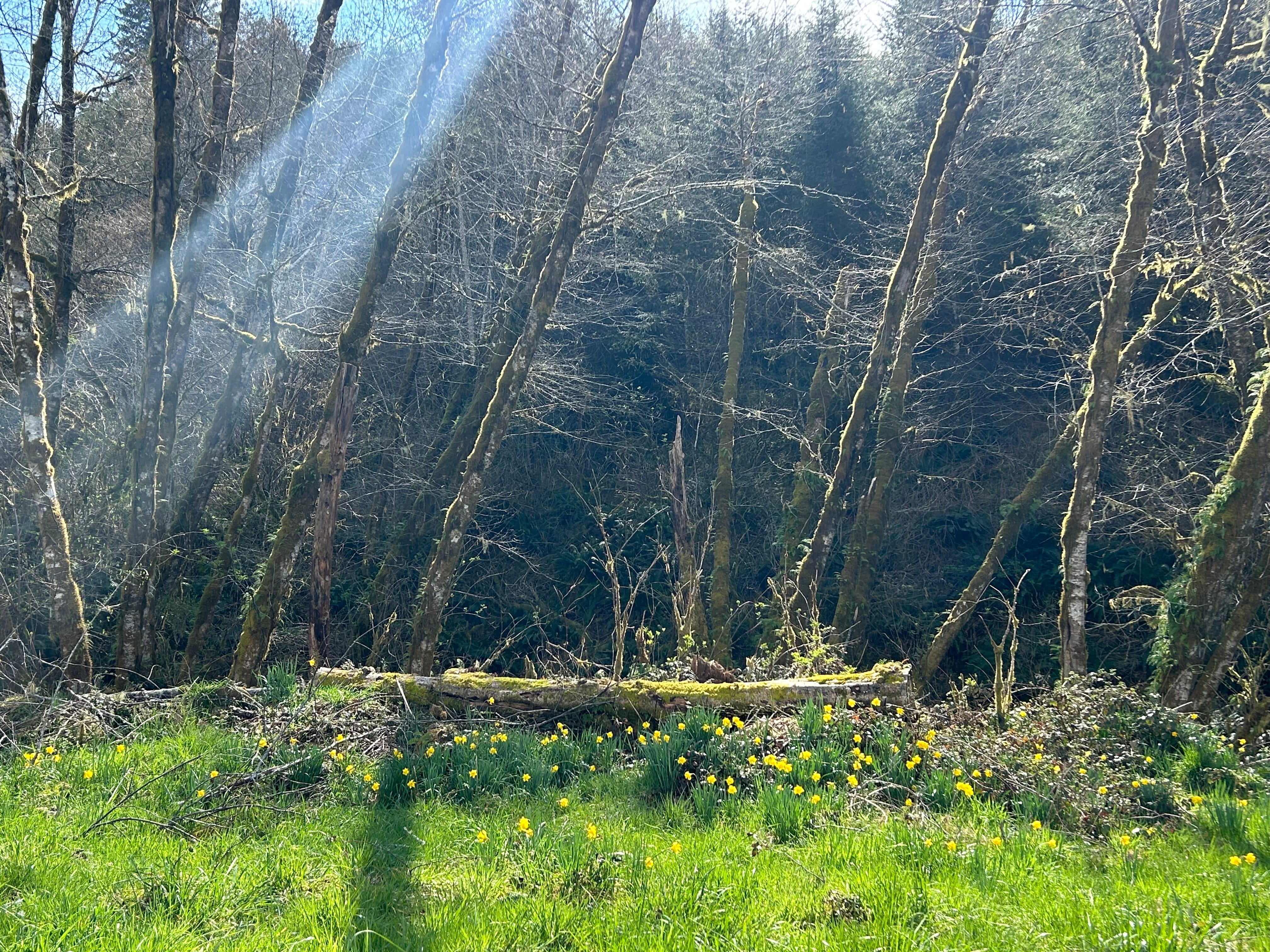
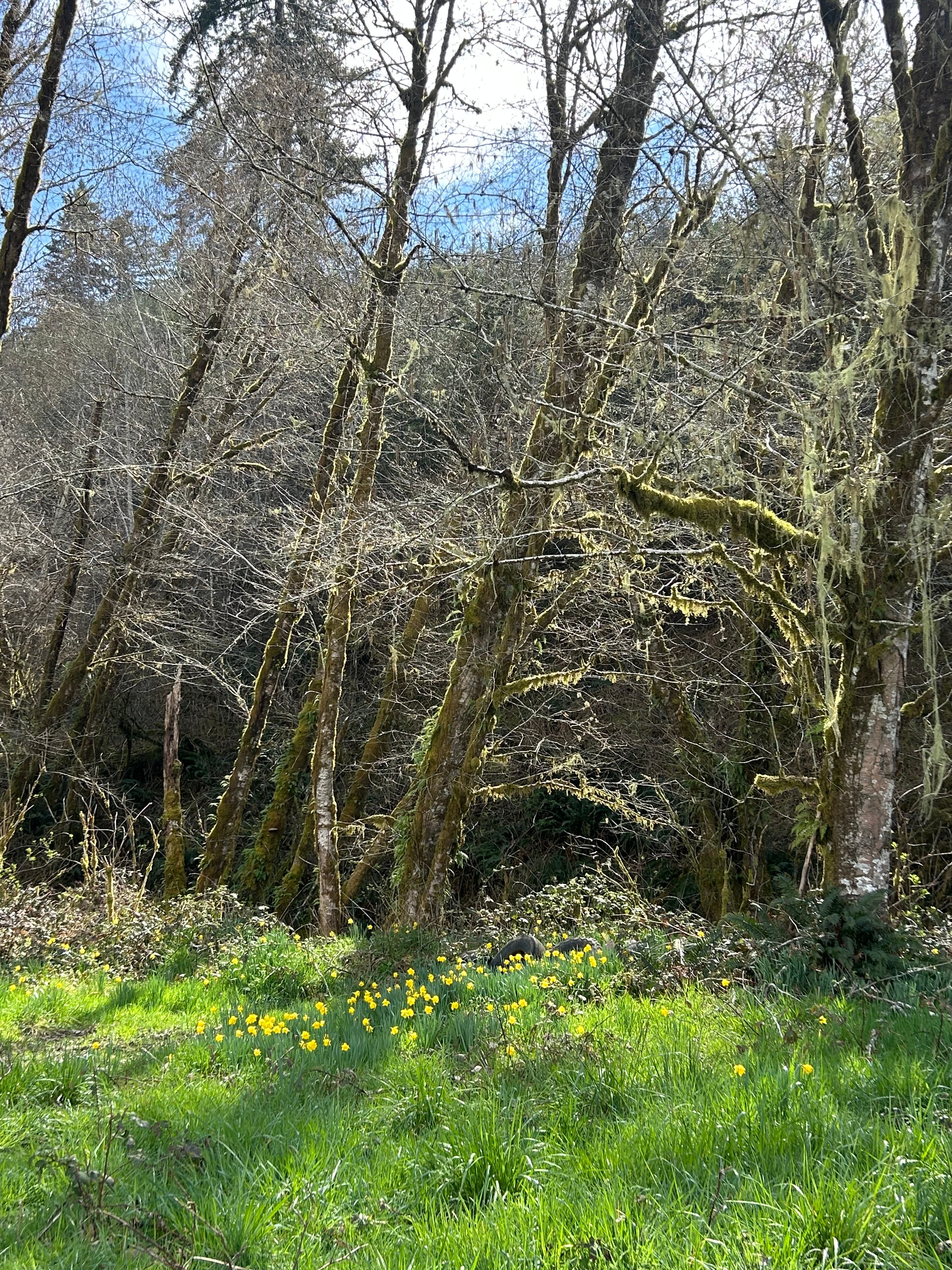
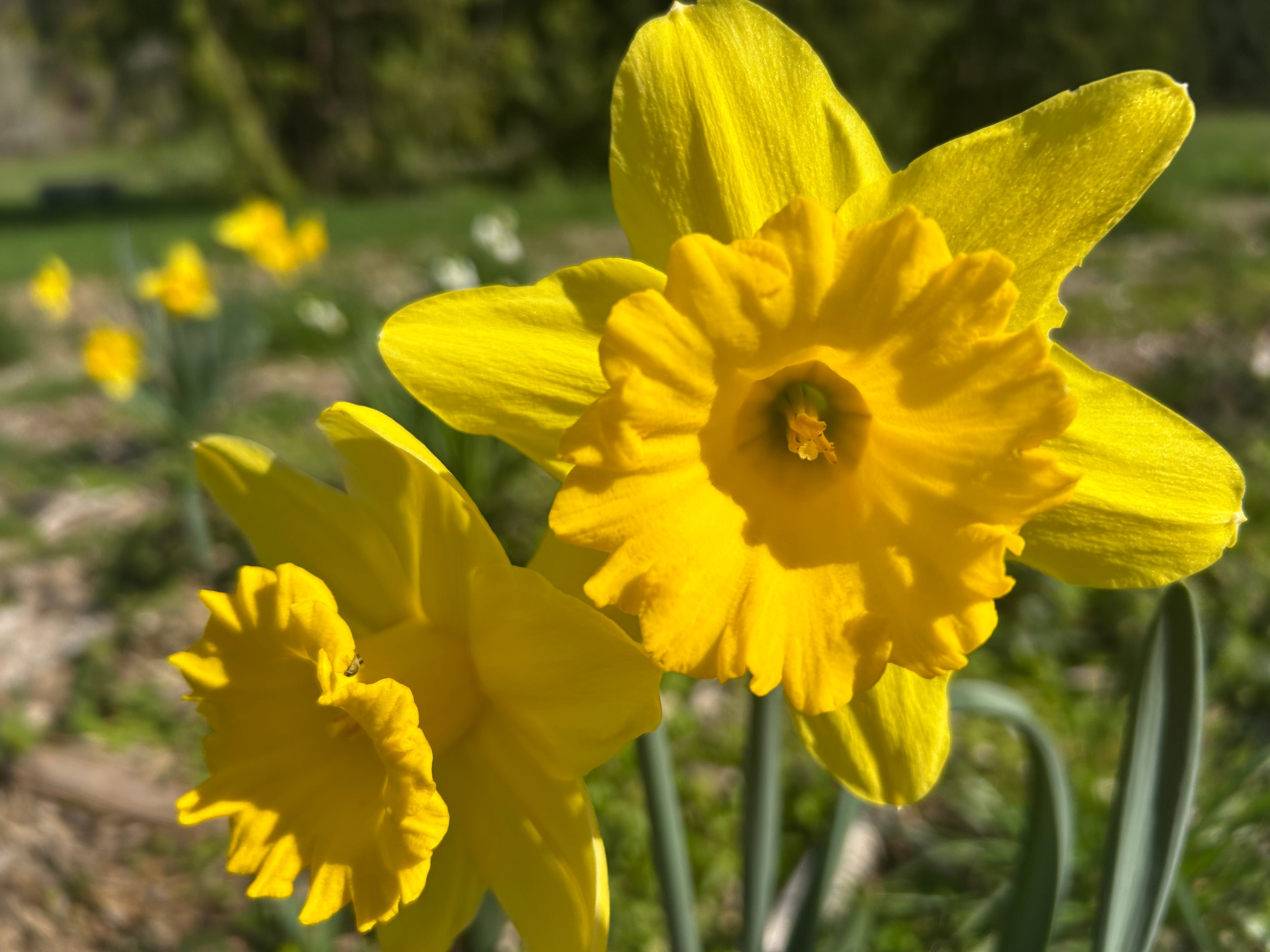
My favorite part of spring in rural Oregon is when rows of daffodils bloom in the wilderness, demarcations of old homesteads now long gone, silent reminders of those who’ve come before us.
I’ve been conducting research for my next novel and went time traveling through the south at the beginning of the month. My father was kind enough to pick me up from the airport and bring me home, just in time to see March in bloom.
On the drive back to my rural hideaway, we were bouncing down a potholed country road when we passed a woman we’d never seen before who’d stopped her vehicle in the middle of her lane and was hanging halfway out her window, flagging us down.
“Stoppppp!” she hollered, face pained, voice frantic.
“What in the hell?” my father said, slowly rolling past the woman, the situation uncertain.
“We’d better go back,” I said. “She seemed pretty upset.”
My father put the car in reverse, rolling his window down as he braked alongside the woman.
“Everything okay?” he asked.
“There is an elk herd a quarter-mile back that way,” the woman screeched, pointing in the direction from which she’d come, “and they are on both sides of the road!”
My face shifted from concerned to outright pissed. I’d just endured four-hour TSA lines at one of our nation’s airports, cancelled flights, and close connections, and I was running on four hours of sleep. I glowered at the woman, judging her as unhinged.
Ever the peacemaker, my father looked to me then shook his head.
“Thanks for the heads up,” he said.
She blanched, as if expecting more … as if expecting gratitude, or perhaps a trophy? As if my father, a seventy-year-old area native, couldn’t possibly navigate the complexity of driving past a herd of elk without harming himself or the animals, as he had countless times throughout his life.
Slipping his foot off the brake, he grinned at me; we rolled our eyes and continued on. In the rearview, I could see the woman still stalled in the road.
While studying abroad in Spain during my junior year of college, I lived with a family of five, and had many interesting conversations with the patriarch of the house. At one point, he opined that Americans had a conqueror’s mindset (ironic, coming from a Spaniard) and that, in our arrogance, we believed the entire world and all its cultures should adapt to us. I remember wanting to tell César to fuck off and go finish the bathroom remodel he’d been working on for three years, but as I witnessed my American peers patronizing Starbucks and McDonald’s in every incredible new city our student cohort visited, I had to admit the old man had a point.
There’s an interesting phenomenon in American culture where, as people migrate somewhere new, they feel some insatiable need to educate those already present on the ways of the place, to impose their worldview on this brave new world they declare ‘discovered’ now that they’ve arrived on the scene …
We witnessed this behavioral tendency in the ‘80s and ‘90s, when wannabe hippies from the East Coast moved west to states like Oregon, Washington, and Montana. Now that this educated elite had arrived to live in the forests, they considered themselves, by default, bonafide forest engineers who ******knew****** the only way to preserve these great lands was via a hands-off, zero-touch approach to forest management. This populace found a mascot in the spotted owl and sponsorship in corporate logging companies and their lobbyists. As strange yet effective bedfellows, this ‘movement’ corporatized the timber industry and closed the federal forests to responsible management practices so the next generation could simply watch them burn (in Oregon, federal forests account for over 80% of wildfire acreage).
I featured this culturally cannibalistic trend in my first novel, Something of Yourself. In the mid-2000s, Millennials were on the move, seeking jobs and lively social scenes in great American cities like Nashville, Austin, Brooklyn, and Seattle … yet when they arrived, it wasn’t enough to simply adapt to and appreciate any pre-existing culture. This generation demanded mainstream material convenience and comfort at the swipe of an app, and developers (software, tech, civic, construction, real estate) were poised to meet those demands with trendy high-rise apartment buildings (you can rent a studio for $2,100 a month! There’s a ping-pong table in the rec room!), industrial-strength public parks (the play structures are plastic and accessible!), and restaurants with subway tiles, exposed wood beams, and wrought-iron finishes. It was all so authentic and exciting! Until all the cities began resembling one another, and the only place you could get ‘authentic’ cuisine was on the outskirts at a Lebanese restaurant or from the woman selling tamales for cash on the side of the road.
Someone opined recently on a podcast that, between the ill-advised conflict we ignited with Iran on Israel’s behalf, our national debt ($39 trillion and climbing), and the dwindling power of the dollar, we may be witnessing the decline of the American empire. Between a brutally unyielding job market and the impending commencement of WW3, we’re enduring an era of unrest and uncertainty that scales from personal to global within seconds. It’s easy to feel overwhelmed by all the catastrophic scenarios and ‘what ifs.’
But just as I believe in grand concepts like American exceptionalism and resiliency (as consistently exhibited by the people, not the government), I find grounding and solace in long walks down country roads. After forty years of wandering the same paths, you’d think I’d grow tired of them, but I don’t. I love seeing the ghostly rows of daffodils in the spring while imagining the hearty women who planted them there a century ago, likely infusing beauty into their rain-soaked days, surely not imagining they would do the same for another woman far into the future.
The world spins madly on, but nature remains a steadfast reminder that there is nothing new under the sun. This isn’t humanity’s first rodeo, and our best approach may be a humble one: hang back, read the proverbial room, and accept that we’re not all too special before proceeding, infused with confidence and the hope for a brighter season.